

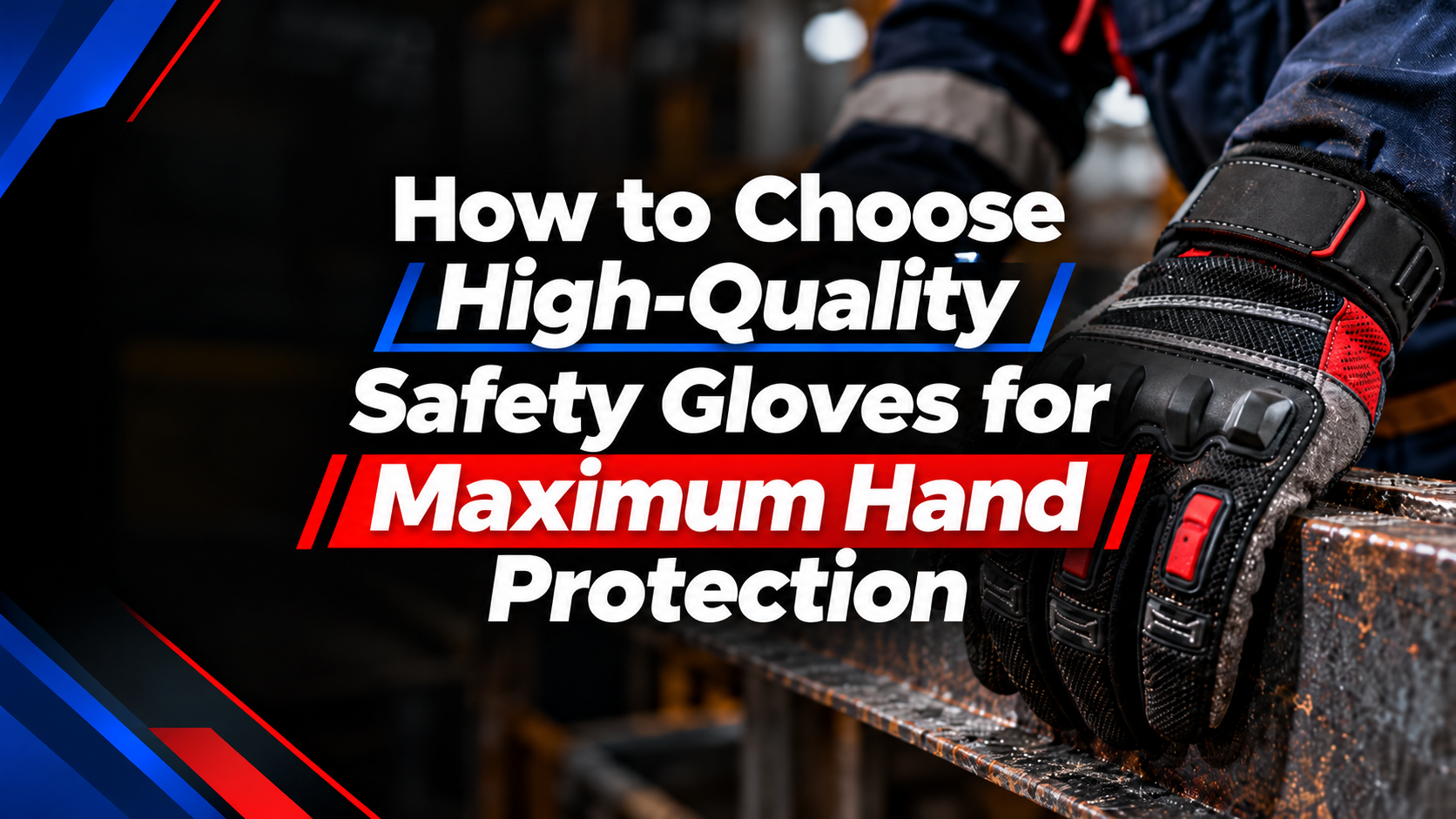
Hands are among the most frequently used parts of the body in industrial, construction, manufacturing, and professional environments. From handling equipment and working with rough materials to performing precision tasks, workers depend on their hands throughout the day.
Selecting high-quality safety gloves is an important step toward improving hand protection, comfort, and workplace efficiency. However, not every glove is suitable for every application.
The right gloves should offer a balance of durability, flexibility, grip, and protection against the specific hazards associated with the task.
At Sanjran Safety Sports, we understand the importance of carefully selected materials, thoughtful glove design, and consistent manufacturing quality. Our approach focuses on developing gloves for various professional and industrial applications, including customized products for businesses and private label brands.
This guide explores the essential factors to consider when selecting safety gloves.
1. Understand the Different Types of Safety Gloves
Before choosing protective gloves, it is important to identify the working environment and the hazards involved.
Different occupations require different levels and types of protection.
Leather Safety Gloves
Leather gloves are widely used in industries where durability and resistance to everyday abrasion are important.
Depending on their design, they may be suitable for:
- Construction and general handling
- Warehouse operations
- Material transportation
- Mechanical maintenance
- Industrial manufacturing
- General workshop activities
Leather offers natural flexibility, a comfortable feel, and dependable durability when selected and maintained appropriately.
Different leather types provide different performance characteristics.
For example, cowhide is commonly valued for durability, while goatskin is often selected for its flexibility and softness.
Cut-Resistant Gloves
Cut-resistant gloves are designed for tasks involving sharp edges or materials.
They are commonly used in metalworking, glass handling, manufacturing, and selected assembly operations.
Protection depends on the glove material, construction, and verified cut-resistance rating. Gloves should be selected according to the actual hazard assessment rather than appearance alone.
Heat-Resistant Gloves
Some workplaces expose employees to elevated temperatures.
Heat-resistant gloves are engineered using materials and construction techniques appropriate for particular thermal hazards.
Different applications may require protection from contact heat, radiant heat, or limited flame exposure.
A glove suitable for one heat-related task may not be appropriate for another.
Coated Work Gloves
Coated gloves often combine a knitted textile liner with a protective coating on the palm and fingers.
Common coating materials include nitrile, polyurethane, and latex.
These gloves may provide useful grip and dexterity for handling, assembly, and maintenance applications.
Their suitability depends on the working conditions and the glove’s tested performance.
2. Choose the Right Glove Material
Material selection is one of the most important considerations in safety glove manufacturing.
A well-selected material can improve product comfort, handling performance, and service life.
Cowhide Leather
Cowhide is commonly used for durable work gloves.
Its characteristics make it a practical choice for many general-purpose industrial applications.
Goatskin Leather
Goatskin is known for its relatively soft feel and flexibility.
It is often used where users need improved finger movement while wearing leather gloves.
Synthetic Leather
Synthetic leather provides manufacturers with design flexibility and consistent visual finishes.
It can be combined with textile panels, reinforced sections, and adjustable closures.
Textile Materials
Polyester, nylon, cotton, and specialized technical fibers may be used in glove linings, shells, or reinforcement areas.
Each material contributes different properties, including comfort, breathability, flexibility, and wear resistance.
At Sanjran Safety Sports, material selection is an important part of developing customized glove designs for different customer requirements.
3. Prioritize Comfort and Proper Fit
Even a durable glove can be unsuitable if it restricts movement or creates unnecessary discomfort.
Proper fitting helps users maintain control while handling tools and materials.
A well-designed glove should provide:
- Sufficient finger movement
- Appropriate palm coverage
- Comfortable wrist construction
- Secure fitting without excessive tightness
- Suitable flexibility for the intended task
Gloves that are too large may reduce handling precision, while gloves that are too small may limit movement.
Correct sizing is therefore essential.
Why Ergonomic Design Matters
Ergonomic glove designs consider natural hand movement.
Features such as shaped fingers, flexible panels, and properly positioned seams can contribute to comfort during repeated tasks.
Manufacturers may also adjust the palm structure, thumb shape, and wrist closure to match specific applications.
4. Evaluate Grip and Handling Performance
Grip is particularly important when handling tools, equipment, or materials.
Poor grip may make tasks difficult and can contribute to unsafe handling.
Different glove designs offer different grip characteristics.
For example, leather palm surfaces may be suitable for certain dry handling tasks, while selected coated gloves may be better suited to other environments.
However, grip performance can change when surfaces are oily, wet, smooth, or contaminated.
Businesses should evaluate gloves under conditions representative of their actual workplace.
Common Grip-Enhancing Features
Manufacturers may use:
- Textured palm surfaces
- Reinforced grip panels
- Suitable coating materials
- Patterned synthetic materials
- Specialized palm construction
The goal is to improve handling performance without unnecessarily reducing dexterity.
5. Examine Stitching and Construction Quality
Glove durability depends on more than the outer material.
Stitching, seam placement, reinforcement, and finishing all influence product performance.
Reinforced Seams
Carefully constructed seams help maintain product integrity during ordinary use.
Certain designs use reinforced stitching in areas exposed to repeated movement or abrasion.
Thumb Construction
The thumb area experiences frequent bending and movement.
Proper thumb construction can improve flexibility and comfort.
Palm Reinforcement
Additional palm layers may be used where higher wear resistance is desirable.
However, reinforcement must be balanced with overall glove flexibility.
Quality Inspection
An effective quality inspection process may include checking:
- Material consistency
- Stitching alignment
- Product dimensions
- Seam finishing
- General appearance
- Functional construction
For specialized protective gloves, additional performance testing may be required.
6. Check Applicable Safety Standards
One of the most important factors when purchasing protective gloves is understanding relevant safety requirements.
Depending on the intended market and application, gloves may need to meet standards such as EN 388 for mechanical risks or relevant ANSI/ISEA requirements.
Other standards apply to different hazards.
A safety claim should be supported by valid testing and applicable certification or conformity documentation.
A glove should never be assumed to provide cut, chemical, electrical, or thermal protection simply because it looks strong or is made from thick material.
Buyers should request appropriate technical information before selecting protective gloves for hazardous applications.
7. Work With a Manufacturer That Supports Customization
Businesses often require more than standard glove designs.
Different industries may need specific materials, closures, colors, reinforcement patterns, or branding.
OEM and private label manufacturing allows businesses to develop gloves around their product requirements.
Possible customization features include:
- Custom colors and material combinations
- Brand labels and logos
- Different glove sizes
- Adjustable wrist closures
- Reinforced palm designs
- Packaging customization
- Private label presentation
At Sanjran Safety Sports, our product offering focuses on glove manufacturing and customization solutions for brands seeking products that reflect their individual market requirements.
How to Maintain Safety Gloves
Proper glove maintenance can contribute to product longevity.
Users should inspect gloves before use and follow the manufacturer’s care instructions.
Damaged gloves should be replaced when they no longer provide the required protection.
Leather gloves should generally be kept away from unnecessary moisture and excessive heat during storage.
Other glove materials may require different cleaning or handling procedures.
For protective gloves, follow any use limits and replacement criteria specified by the manufacturer.