

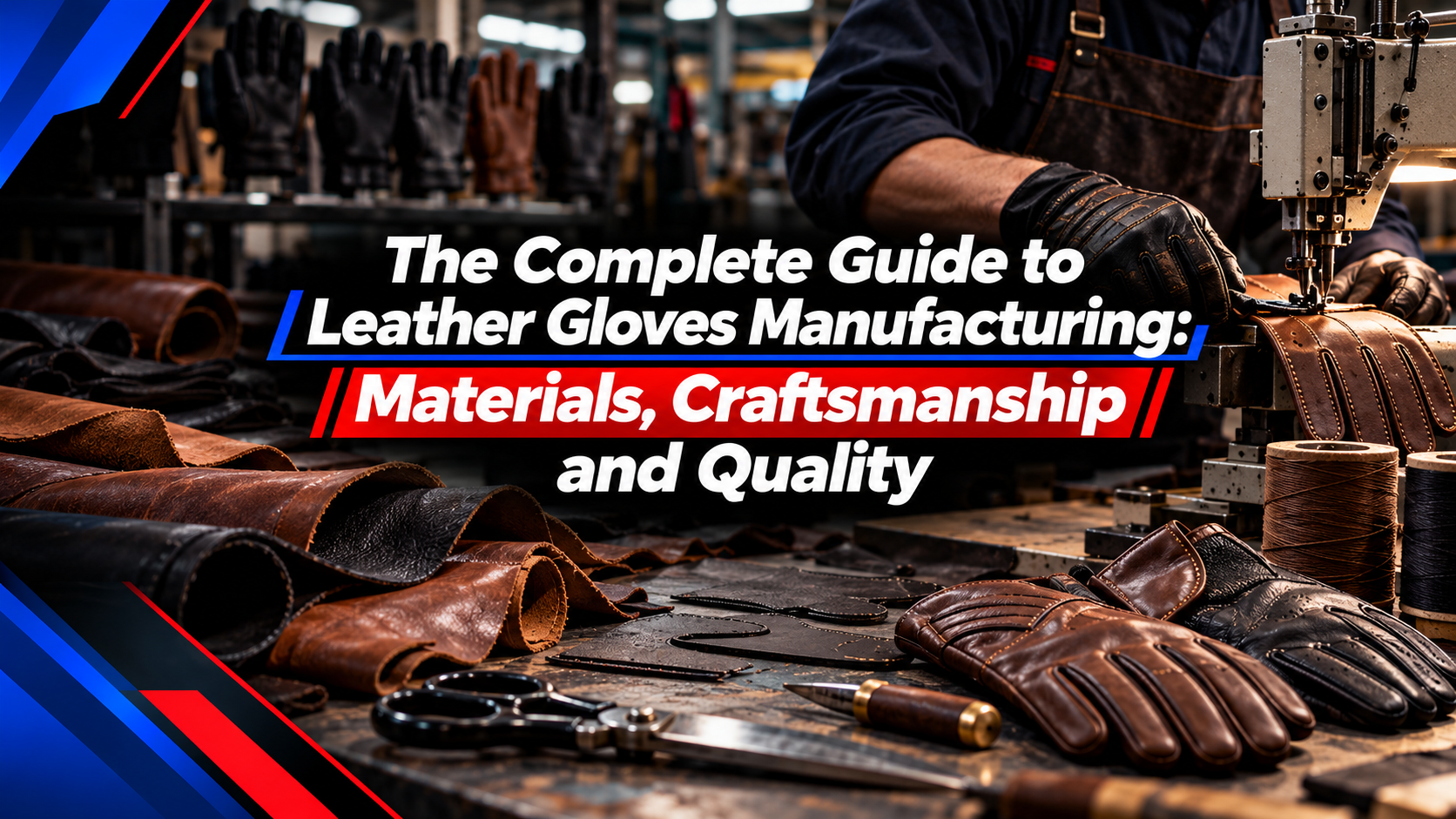
Leather gloves have long been valued for their combination of durability, flexibility, and distinctive appearance.
They are used in a variety of applications, from general industrial work and equipment handling to selected sporting activities and professional tasks.
However, the quality of a leather glove depends on much more than its appearance.
Material selection, leather thickness, cutting accuracy, stitching quality, design construction, and finishing all influence the performance and durability of the finished product.
Understanding the leather gloves manufacturing process helps buyers make informed decisions when sourcing products for retail, wholesale, or private label collections.
At Sanjran Safety Sports, we recognize the importance of material quality and careful craftsmanship in glove production.
In this guide, we explore the key stages of leather glove manufacturing and explain what businesses should consider when developing customized glove products.
1. Understanding Leather Glove Manufacturing
Leather glove manufacturing involves transforming selected leather materials into finished gloves through a sequence of design, cutting, stitching, assembly, and finishing operations.
Although the exact production method depends on the glove type, most processes follow a similar overall structure.
The manufacturer begins by determining the intended use of the glove.
This decision influences the materials, thickness, pattern, construction, and additional design features.
For example, a glove intended for general material handling may have different characteristics from one designed for comfortable hand movement in a sporting activity.
A successful manufacturing process aligns design choices with the product’s intended purpose.
2. Selecting the Right Leather Material
Leather selection is one of the most important stages of production.
Different leather types offer different levels of softness, flexibility, durability, and resistance to everyday wear.
Cowhide Leather
Cowhide is commonly selected for work gloves because of its durability and availability.
It can be used in applications where a relatively robust leather construction is desirable.
Goatskin Leather
Goatskin is often valued for its flexible and soft characteristics.
It can be suitable for glove designs requiring comfortable hand movement and relatively fine control.
Sheepskin Leather
Sheepskin is known for its soft texture and flexible feel.
It is often used for gloves where comfort and suppleness are particularly important.
Split Leather
Split leather comes from the lower layers of a hide after separation.
It is used in various leather products, including selected work gloves.
Its characteristics depend on the source material, processing, and finished construction.
Grain Leather
Grain leather retains the outer surface characteristics of the hide.
It can provide a distinctive appearance and useful durability.
The suitability of any leather type depends on the finished glove design and intended application.
3. Leather Inspection and Material Preparation
Before cutting begins, leather materials should be evaluated for suitability.
Natural leather can vary in texture, thickness, flexibility, and appearance.
Manufacturers may inspect the material for:
- Surface consistency
- Visible defects
- Thickness variation
- Flexibility
- Color consistency
- Suitable usable areas
Some variation is normal in natural leather.
However, materials should meet the specifications required for the intended product.
Why Thickness Matters
Leather thickness can influence glove flexibility, weight, and durability.
Thicker leather is not automatically better.
A material that is too thick for a particular design may reduce dexterity or comfort.
Likewise, thinner leather may not be suitable for applications where greater wear resistance is required.
The appropriate balance depends on the intended use.
4. Glove Pattern Development
Once the material has been selected, the next step involves creating the glove pattern.
A glove pattern determines the shape and dimensions of the different components that will eventually be assembled.
Common components may include:
- Palm section
- Backhand section
- Finger panels
- Thumb section
- Wrist or cuff
- Reinforcement pieces
Importance of Pattern Accuracy
Even small inaccuracies in cutting patterns can affect comfort and fitting.
Poorly positioned seams may cause discomfort.
Incorrect finger dimensions may restrict movement.
An effective pattern should account for hand shape, material flexibility, and construction requirements.
Creating Different Sizes
Gloves are commonly offered in multiple sizes to accommodate different users.
Manufacturers may use pattern grading to create consistent size variations.
Each size should be evaluated against relevant measurement requirements.
5. Precision Cutting of Leather Components
After preparing the patterns, leather components are cut according to the required dimensions.
Cutting may be performed using manual tools, specialized cutting equipment, or suitable automated systems.
Material Positioning
Natural leather varies across the hide.
Manufacturers may position pattern pieces to use material efficiently while considering strength, appearance, and flexibility.
Cutting Accuracy
Accurate cutting helps maintain consistency between glove components.
Poorly cut sections can create fitting problems during assembly.
Material Efficiency
Efficient cutting layouts can help reduce unnecessary waste.
Careful material planning is particularly important when working with premium leather.
6. Stitching and Glove Assembly
Stitching is a central part of leather glove construction.
Once the components are cut, they are assembled using methods appropriate to the design.
Industrial sewing machines are commonly used for this process.
Stitching the Finger Sections
Finger panels require accurate alignment.
Stitching should allow appropriate movement and avoid unnecessary bulk.
Thumb Assembly
Thumb construction can influence grip and flexibility.
The thumb pattern should be designed to support natural hand movement.
Joining the Palm and Backhand
The front and back sections are assembled according to the selected construction.
Correct alignment helps the glove maintain its intended shape.
Reinforcement Stitching
Some glove designs use additional stitching or reinforcement in high-wear areas.
Reinforcement may be incorporated around the palm, thumb, or other locations depending on the product’s purpose.
Thread Selection
Thread properties should be suitable for the leather and expected use conditions.
The appropriate thread depends on the glove construction and product specifications.
7. Adding Functional Design Features
Leather gloves may include additional features to support comfort, practicality, or appearance.
Reinforced Palms
Selected designs include an extra layer of material in the palm.
This may improve wear resistance in specific applications.
However, the additional layer can also influence flexibility.
Adjustable Wrist Closures
Hook-and-loop straps and other closures can help create a secure fit.
Extended Cuffs
Some gloves use longer cuffs to provide additional wrist or forearm coverage.
The protective value of a cuff depends on its construction and the relevant hazard.
Flexible Panels
Textile or specially designed leather panels may improve flexibility in selected areas.
Interior Linings
Linings may be included to improve comfort or meet other design objectives.
Lining materials should be chosen based on the glove’s intended application.
8. Quality Control in Leather Gloves Manufacturing
Quality inspection is essential for maintaining consistent product standards.
A well-planned inspection process helps identify manufacturing defects and verify that the finished product matches the approved specifications.
Material Inspection
The process begins with checking the materials before production.
Stitching Inspection
Inspectors may review stitching alignment, seam consistency, and visible construction defects.
Size Verification
Finished gloves should be checked against the approved size specifications.
Visual Inspection
Inspectors may examine:
- Surface condition
- Color consistency
- Product symmetry
- Finishing details
- Branding placement
- General cleanliness
Functional Evaluation
Depending on the design, basic functional checks may include movement, fastening, and fit assessments.
Specialized protective gloves require additional evaluation against relevant performance requirements.
Visual inspection alone cannot establish protective performance.
9. Finishing, Branding, and Packaging
The final stages of leather glove production help prepare the product for distribution.
Finishing
Finishing processes may involve removing excess threads, inspecting edges, checking closures, and cleaning the gloves.
Custom Branding
OEM and private label customers may request different branding methods.
These can include embossed leather patches, printed logos, stitched labels, or selected decorative details.
The branding method should suit the material and product design.
Packaging
Packaging helps protect the product during handling and transportation.
It also provides an opportunity to communicate brand identity and important product information.
Wholesale Packaging
Bulk orders may require individual bags, product labels, cartons, and shipping markings.
Packaging should be appropriate for the product, shipment conditions, and destination market.
The Role of Customization in Modern Glove Manufacturing
Customization has become an important part of product development for many sports equipment, workwear, and safety supply brands.
A company may want gloves that match its brand identity or provide characteristics for a particular application.
Customization can involve:
- Leather type
- Material color
- Pattern design
- Finger construction
- Wrist closure
- Palm reinforcement
- Stitching appearance
- Logo application
- Product labels
- Packaging
For example, a brand may choose brown leather with black reinforcement panels and a custom embossed logo.
Another business may prefer a lightweight goatskin design with a different wrist closure.
The selected features should always support the intended use of the finished product.
How to Choose a Leather Glove Manufacturer
Selecting the right manufacturing partner requires evaluating several factors.
Product Development Capability
The manufacturer should be able to understand the desired product specifications.
Material Knowledge
A supplier should be familiar with the materials relevant to the requested glove type.
Sample Quality
Physical samples help buyers evaluate craftsmanship, fitting, and appearance.
Communication
Clear communication supports accurate product development.
Production Consistency
Businesses should establish documented specifications and appropriate quality expectations.
Compliance Awareness
Where protective gloves are involved, manufacturers and buyers should understand the relevant product standards and legal requirements.
Branding Flexibility
For private label projects, buyers should establish which logo applications, packaging options, and customization services are available.
Why Leather Gloves Remain Popular
Leather remains an important glove material because it provides a combination of practical and aesthetic characteristics.
Depending on the leather type and construction, advantages can include:
Durability: Suitable leather constructions can withstand repeated ordinary use.
Flexibility: Certain leather materials allow comfortable hand movement.
Natural Appearance: Leather offers distinctive grain patterns and textures.
Design Versatility: Leather can be used in different glove styles.
Customization Potential: Manufacturers can combine leather with textile panels, reinforcement sections, and branding details.
These characteristics make leather a versatile option across multiple product categories.
However, the performance of a finished glove should always be assessed according to its actual design and intended application.
OEM Leather Gloves Manufacturing at Sanjran Safety Sports
At Sanjran Safety Sports, we focus on developing glove solutions that balance craftsmanship, functionality, and customer requirements.
We recognize that businesses may require different material combinations, product patterns, colors, and branding options.
Our emphasis on customized manufacturing is intended to support brands and wholesale customers seeking distinctive glove collections.
From design planning and material selection to product construction and finishing, attention to detail is an important part of creating dependable glove products.
For brands interested in OEM and private label manufacturing, clear product specifications and sample development provide the foundation for successful production.